Seiko Divers Development Timeline
1964
Seiko serves as the Official Timekeeper for the 1964 Tokyo Olympics.
1967
Seiko watches win the highest awards in the Observatoire Cantonal de Neuchâtel competition held in Switzerland.
1965 - 1968: 6217 divers
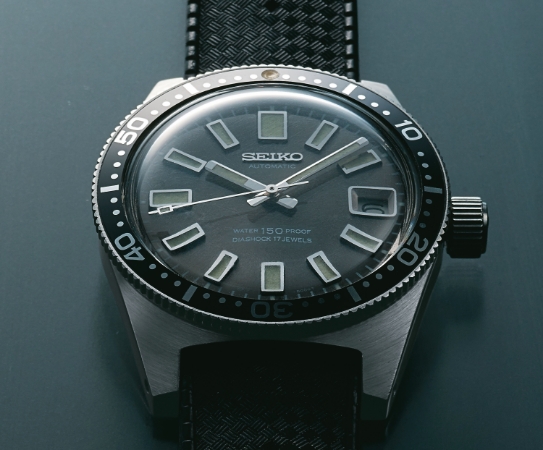
Seiko releases its first diving watch, the 6217 (62MAS) diver, featuring a rotating bezel and waterproof depth rating of 150m. The 62MAS divers use the 17J cal. 6217A movement with a frequency of 18,000bph. The movement is non-hacking and also does not have manual winding. With this release, Seiko begins the development of a line of watches designed for professional and specialized use in extreme conditions.
1966
Seiko supplies 62MAS divers to the 8th Japanese Antarctic Research Expedition (JARE8). This marks the start of a history of engagement between Seiko and polar research teams where its timepieces will be put to professional use in harsh environments under highly demanding external conditions. Seiko will continue this tradition of providing its diver's and other watches for future polar expeditions and use by explorers.
1967

Seiko releases its first Professional 300m diver, the 6215-010 (6215-7000), which uses the 35J cal. 6215A movement (based on the 6206A), beating at 19,800bph. The 6215 divers were used by the 9th Japanese Antarctic Research Expedition (JARE9) as part of their equipment for underwater survey work.
1968 - 1977: 6105 divers
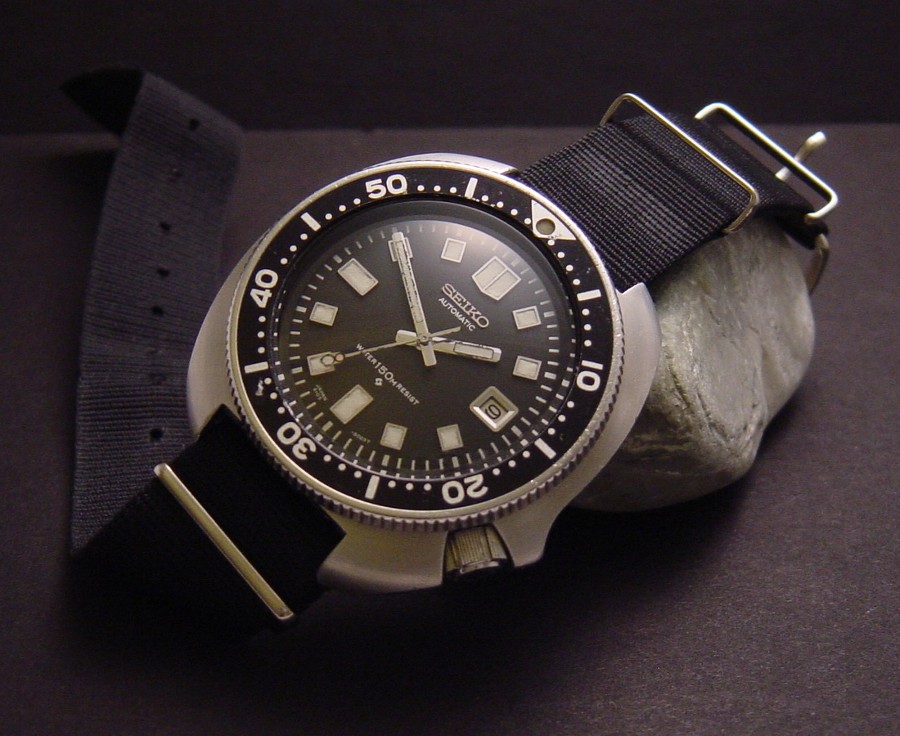
Seiko releases the 6105-8000/6105-8009 (model 61MC010) diver to succeed the 62MAS. The 17J cal. 6105A movement has an increased frequency of 21,600bph over the former cal. 6217A's 18,000bph. In 1970, the 6105-800x divers will be replaced by the 6105-8110/6105-8119 (model 61MC022) diver which features a larger cushion case design.
1968
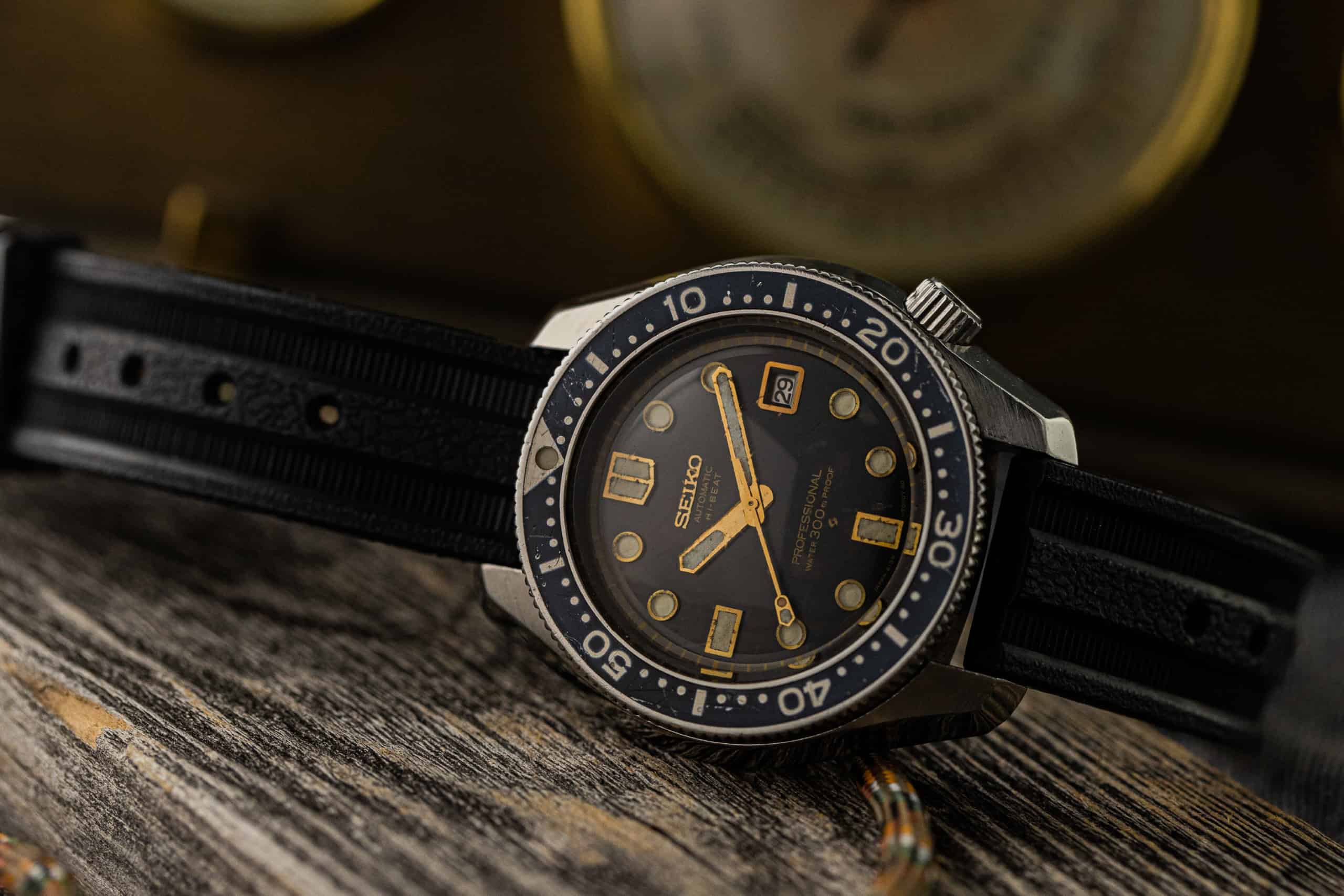
Seiko introduces the 6159-010 (6159-7000) Professional 300m Diver, which uses the 25J high-beat cal. 6159A movement with a frequency of 36,000bph for better accuracy. This diving watch design is the foundation for subsequent iterations of the 300m "MarineMaster" professional divers.
1970

As part of "The Japanese Mount Everest Expedition 1970 (JMEE '70)," explorers Naomi Uemura and Teruo Matsuura of the Japanese Alpine Club reach the South Peak of Mt. Everest. Both climbers use the Seiko 6159-011 (6159-7001) diver as part of their climbing equipment.
1974 - 1976

Naomi Uemura completes an 18-month, 12,000km solo dog-sled run from Greenland to Alaska. The watch he wore on his wrist is a 6105-8110 diver. The Seiko SLA049 "Naomi Uemura 80th Anniversary Limited Edition" Prospex diver, released in 2021, is meant to commemorate Uemura's lifelong, extraordinary accomplishments. In 2023, Seiko will again release an additional Uemura commemorative diver, the SLA069 "Naomi Uemura Limited Edition."
1975
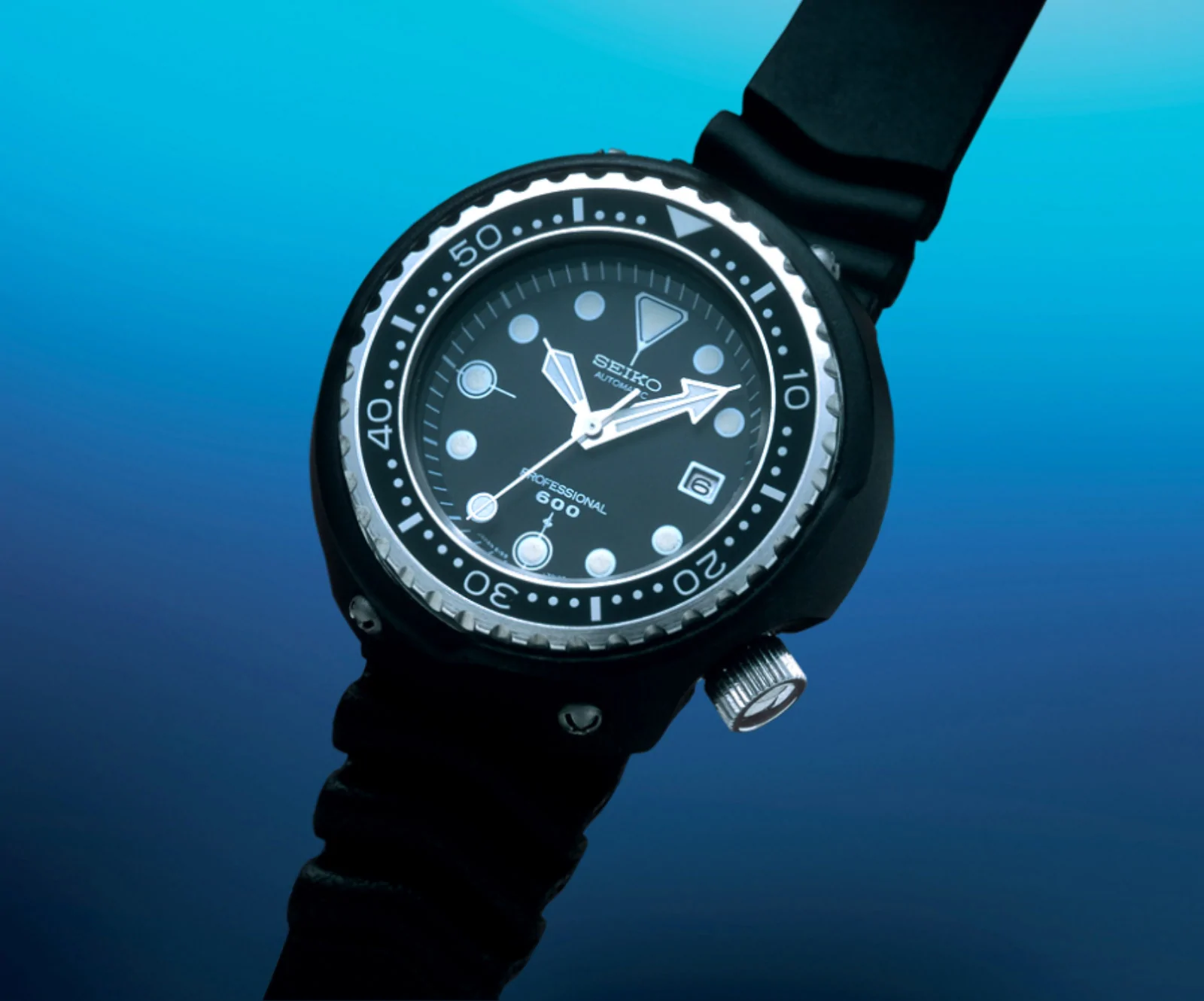
Seiko releases the 6159-022 (6159-7010) Professional 600m Diver, the world's first titanium watch designed specifically for saturation diving. It uses the 25J cal. 6159B movement beating at 36,000bph. This is the first of Seiko's iconic shrouded diver design inspired by the mechanical structure of a barnacle, thanks to the pioneering engineering work of Mr. Ikuo Tokunaga. The watch is known today as the original "Tuna" with a two-piece construction consisting of a heavy protective shroud over the watch case. The diver is also notable for a case design that is impermeable to helium gas, thereby eliminating the need for a helium value often used in other saturation diving watches. Seiko receives over 20 patents on this watch's design.
1976 - 1981: 6306 divers
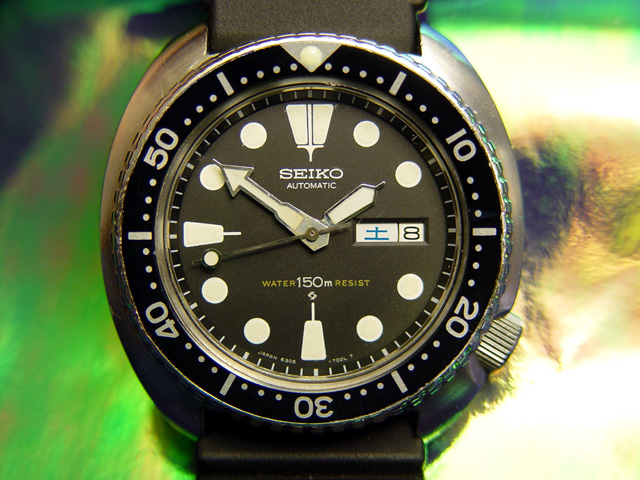
Seiko releases the 6306-7000/6306-7001 diver for the Japanese domestic market (JDM). The 6306 diver uses the 21J cal. 6306A movement, which has a frequency of 21,600bph, a hacking feature, and a Japanese Kanji day wheel.
1976 - 1982: 6309-704x divers
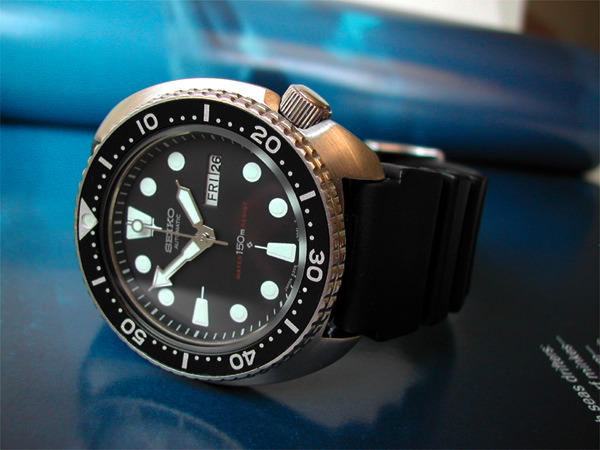
Soon after the release of the JDM 6306 diver, Seiko introduces the 6309-7040/6309-7049 diver for the international market. The 6309 diver uses the 21J cal. 6309A movement, which is almost identical to the cal. 6306A except that it lacks the hacking feature and does not have a Japanese Kanji day wheel.
1978
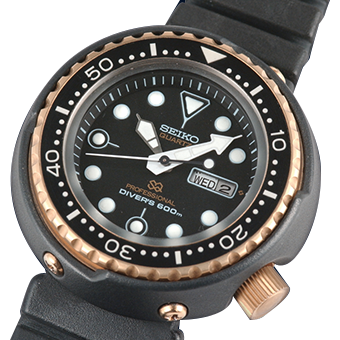
Seiko releases the world's first saturation diving watch using a quartz movement. In 1983, the watch is attached to the outer hull of JAMSTEC's (Japan Agency for Marine-Earth Science and Technology) Shinkai 2000 research submersible and survives a descent of 1062m.
1979
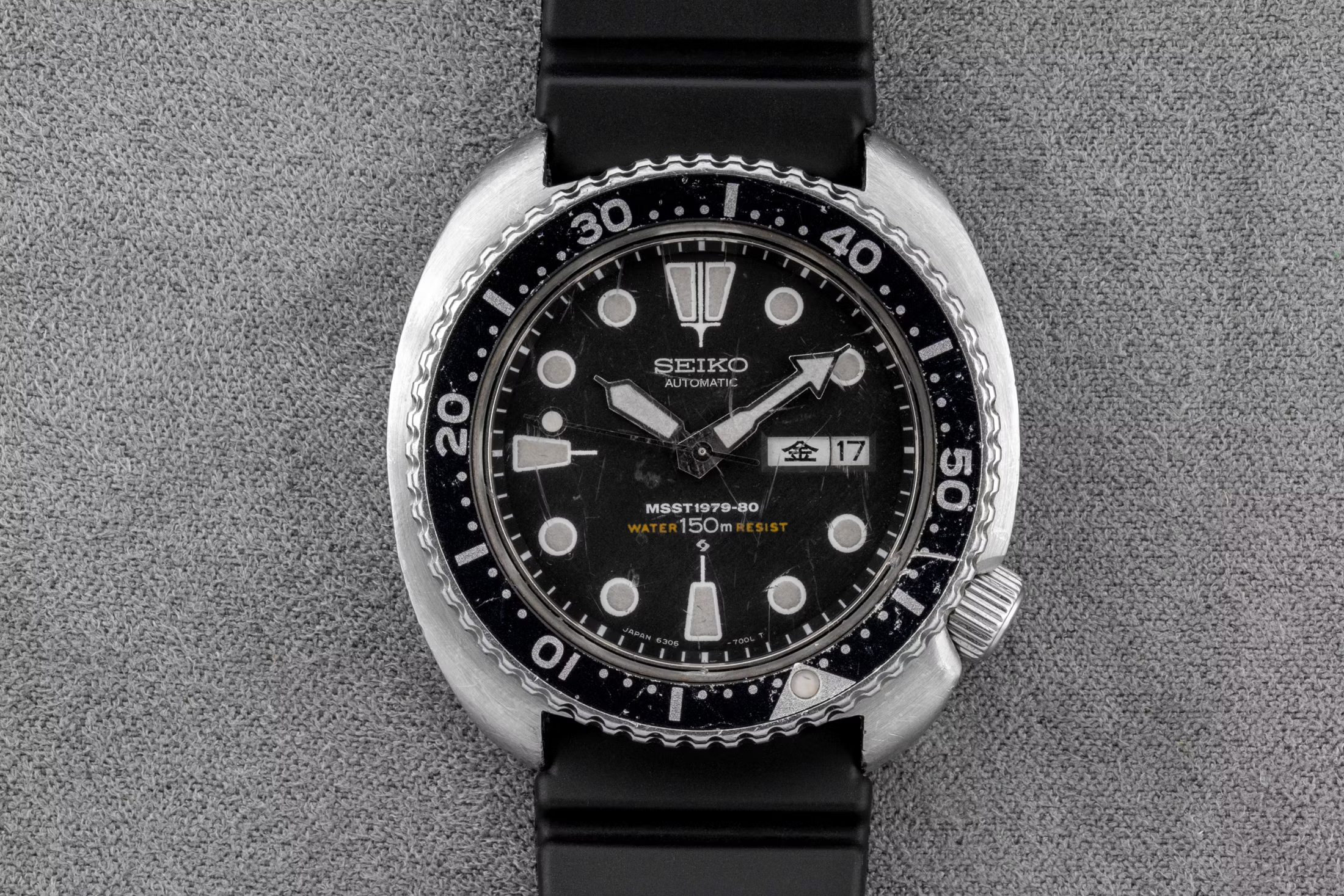
Seiko 6306 divers are used by Japanese Antarctic research team members in the 1979 McMurdo Sound Sediment and Tectonic Study (MSSTS). A Hodinkee article recounts how a Seiko 6306 bought from an Ebay sale contains a special inscription on the dial which traces its origin back to the "MSSTS" research team receiving the Seiko divers as gifts from their expedition leader Dr. Tetsuya Torii.
1982-1988: 6309-729x divers

Credit: hubcityvintage.com
The 6309 cushion case is replaced by the 6309-7290/6309-729A/6309-729B diver series, which feature a slimmed-down case but uses the identical cal. 6309A movement as the 6309-704x divers. We can see from the design that with this iteration of the 6309 diver Seiko is shifting to the smaller non-cushion case design we are familiar with since then in the 7002 and 7S26 diver's series.
1986

Seiko releases the Professional Diver's 1000m watch (SSBS018, also known by the model no. 7C46-7009/7010), featuring an outer ceramic shroud. The case is made of light-weight titanium manufactured to be corrosion resistant and is able to withstand pressure of 1000m. This saturation diver uses the cal. 7C46 quartz movement.
1988 - 1996: 7002 divers
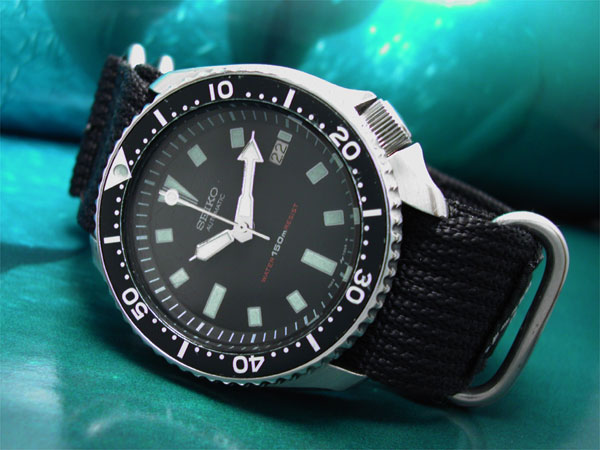
7002 divers with slimmed-down cases replace the 6309 divers. The 7002 diver's series uses the 17J cal. 7002A movement with a frequency of 21,600bph. Initially the 7002 diver has a depth rating of 150m. The later version of the 7002 diver (7002-7039) has an increased rating of 200m, and also features a uni-directional rotating bezel.
1996 - 2020: 7S26 divers
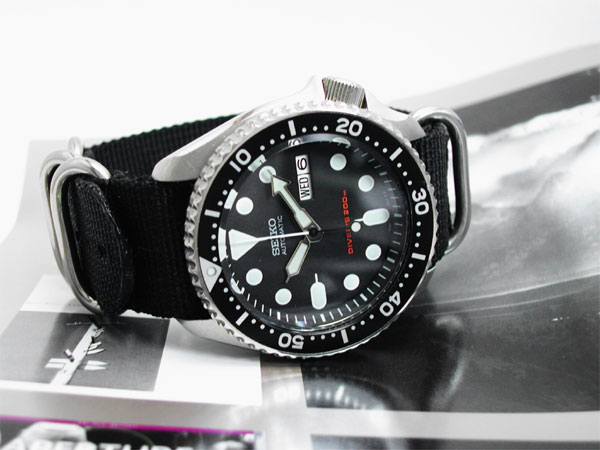
As Seiko introduces a new movement to replace the cal. 70xx movements based on the 7005, 7002 150m and 200m divers are replaced by 7S26 divers. All 7S26 divers are now rated at 200m and use uni-directional rotating bezels.
2011 - present
Seiko introduces the 4R series movement to slow replace the 7S series. Starting in 2012 or so, Seiko releases diver models (such as the 2nd generation of the "monsters") using the new movement. The now older SKX models will slowly get phased out as new models all adopt the 4R movement.
2014

Two MarineMaster Professional 1000m Divers -- the quartz SBBN013 and the automatic SBDX011 -- are selected for a deep-ocean depth test for durability and water pressure resistance. The divers are attached to the outer hull of JAMSTEC's (Japan Agency for Marine-Eath Science and Technology) Kaiko 7000II deep-sea ROV and lowered to a depth exceeding 4200m. Both watches perform perfectly at depths over 3000m, exceeding their rating of 1000m by more than threefold (SEIKO Prospex MARINEMASTER Water-resistance EXTREME-TEST to 4299M).
2019/2020
Since the introduction of the cal. 4R movements, Seiko has released new divers using the new, updated versions of movements while slowly phasing out the older divers. The classic SKX007 diver is finally retired around 2019/2020. Together with the new 4R movement divers, Seiko also introduces large number of up-market versions of the classic divers use 6R movements.